Weak pressure is rarely the city main; it’s usually one valve, one filter or one corroded pipe
1. The main shutoff isn’t fully open
This is the first thing to rule out and the cheapest to fix. A main shutoff that was closed for a repair and only turned back most of the way will choke the whole house. Open it fully, then back it off a quarter turn so it doesn’t seize in place.
2. A clogged aerator on one faucet
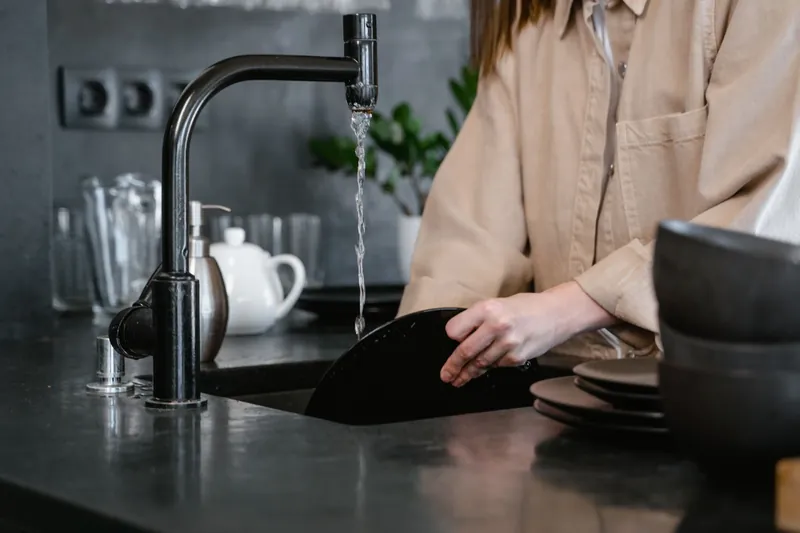
If the problem is at a single faucet rather than across the house, unscrew the aerator at the tip of the spout. Grit and mineral scale collect in that screen and choke the flow. Soak it overnight in vinegar, rinse it and screw it back on before assuming anything bigger is wrong.
3. Mineral scale narrowing the pipes
With hard water, the inside of a pipe shrinks year by year as scale builds. It happens slowly enough that nobody notices until a shower feels weak, and it hits the hot side first because heat speeds up the buildup.
4. A worn-out pressure-reducing valve
Many homes have a valve that holds incoming city pressure at a safe level. When its internal diaphragm wears out it tends to fail low, and the drop shows up at every faucet at once rather than gradually. Replacing it is a short job with an instant result.
5. A leak between the street and the house
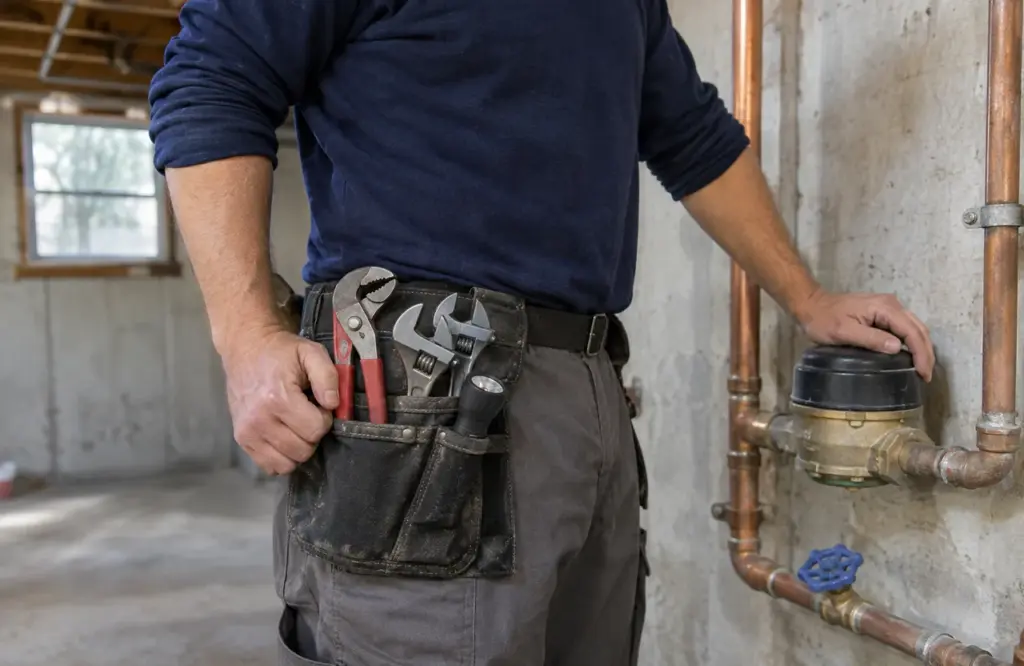
Water escaping on the service line never reaches your faucets, so pressure falls and the bill rises together. If the meter keeps moving with everything turned off, the loss is underground and needs tracing before anything indoors is touched.
6. Too many fixtures on one line
Pressure that collapses the moment a second faucet opens is usually a sizing problem rather than a fault. An undersized line feeding a whole bathroom simply can’t supply two fixtures at once, and upsizing that section fixes it for good.
“Almost every weak shower we’re called out to turns out to be one restricted part, not a whole house that needs repiping.”
7. A problem in the street, not in your home
Sometimes nothing inside is wrong. Water main work on your street, a city valve left partly closed, or peak summer demand will all show up as poor pressure. A gauge on the outdoor hose bib tells us in minutes which side of the meter the problem is on.
Any one of these can explain a weak shower. Two together usually explain a whole house that has slowly lost its pressure over a year or two.