A kitchen remodel is the cheapest chance you’ll ever get to replace the piping behind it. The walls are already open, the floor is already up, and access that would normally cost a fortune is suddenly almost free. The decisions that matter all have to be made before the drywall goes back up.
1. Choose the pipe material before demolition begins
Copper, PEX and CPVC each behave differently inside a kitchen wall, and the choice changes the routing, the insulation and how every joint is made. Deciding early avoids the mid-job compromise where half the line is one material and half another, joined by fittings nobody can inspect later.
2. Plan for every fixture you may add
A pot filler over the range, a prep sink in the island, a filtered water faucet, an ice maker line for the fridge — each one needs its own supply. Roughing them in while the wall is open costs a fraction of adding one later, even if the fixture itself doesn’t go in for another two years.
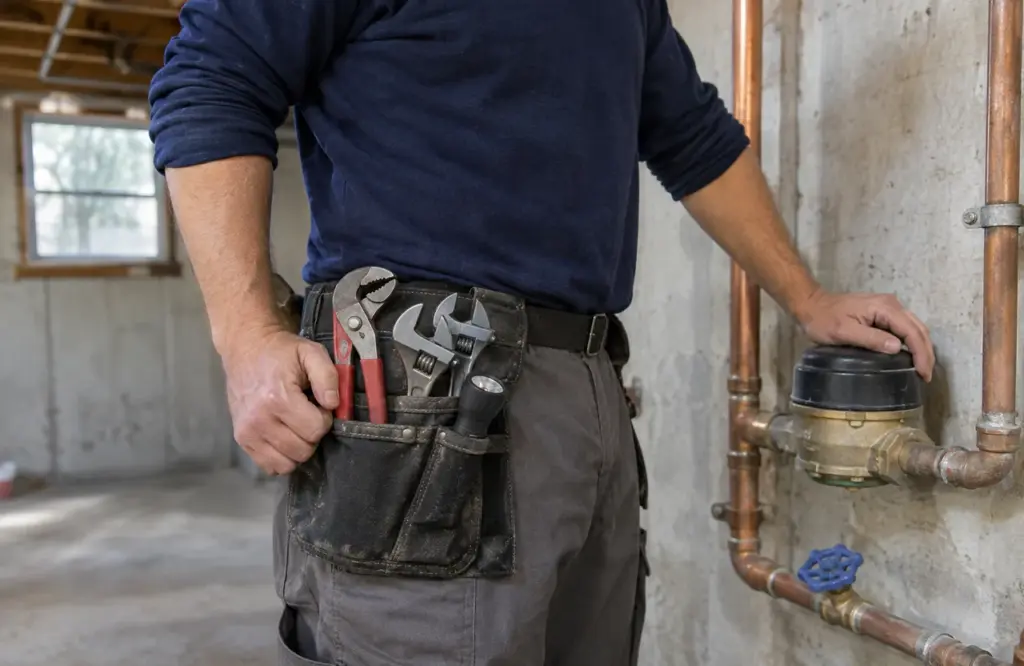
3. Shutoff valves cost little now and a lot later
Every fixture should get its own shutoff valve, placed somewhere you can actually reach it without emptying a cabinet. It adds very little to the bill during a repipe, and it means a future leak affects one faucet instead of the whole house.
The same goes for the branch that feeds the kitchen as a whole. One reachable valve on that line turns a future repair from a whole-day job with the main off into an afternoon.
4. Line up the trades so nothing gets buried
Plumbing goes in before electrical wherever the two fight over the same joist space, and both go in before insulation and drywall. Getting that order wrong is how supply lines end up notched through structural framing or run somewhere the inspector won’t pass.
“The costly part of a repipe is never the pipe itself. It’s the drywall, tile and cabinets you have to pull apart to get at it — which is why repiping during a remodel is such good value.”
5. Budget time for inspections, not just materials
In Columbus and most Ohio towns, a permit means a rough-in inspection before anything is covered and a final once fixtures are hooked up. Both take time to book, and a failed rough-in means the drywall waits.
Build that into the schedule from the start. A week of slack costs nothing; finding out you need it after the drywall crew is booked costs a great deal.